

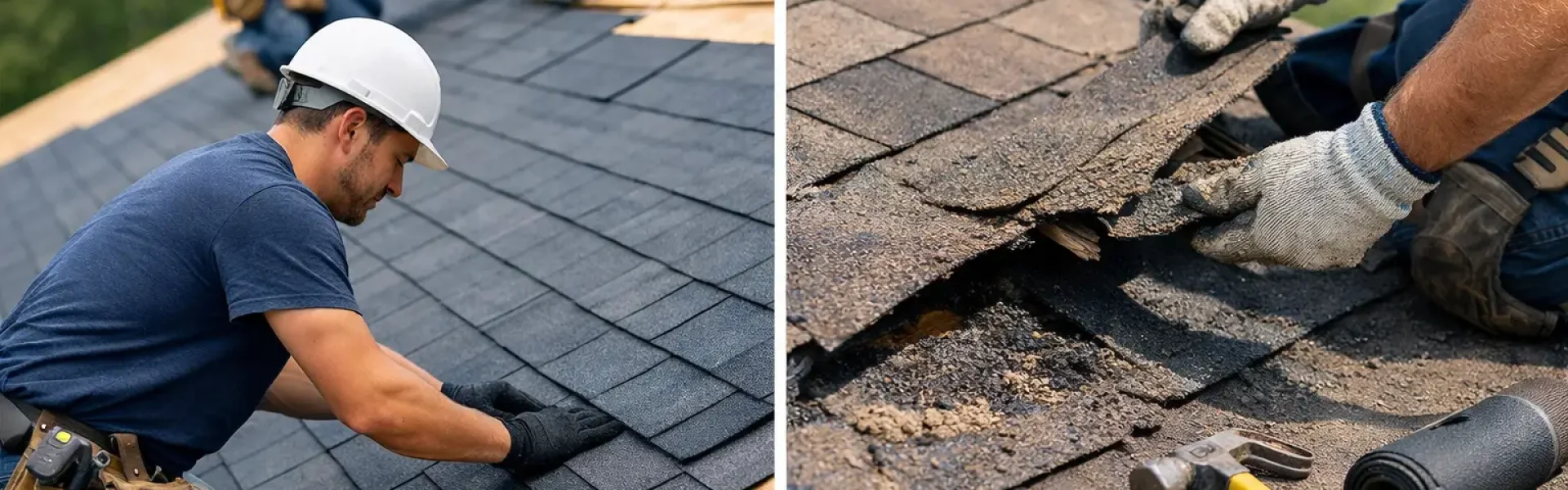
A roof problem in South Florida rarely stays small for long. One loose shingle, one stubborn leak, or one section of lifted flashing can turn into interior damage fast, especially when summer storms start stacking up. If you are weighing new roof vs roof repair, the right answer depends on more than the spot you can see from the driveway.
For homeowners in Miami-Dade and Broward, this decision is tied to storm protection, insurance concerns, home value, and how much life your current roof truly has left. A quick repair can be the smart move in some cases. In others, it only delays a bigger and more expensive problem.
New roof vs roof repair: Start with the roof’s age
Age is one of the clearest indicators. If your roof is relatively new and the damage is isolated, repair often makes sense. A missing section of shingles after a wind event, a minor flashing issue around a vent, or a small leak traced to one problem area may not justify a full replacement.
If your roof is nearing the end of its expected service life, the conversation changes. Asphalt shingle roofs often last around 15 to 25 years in real-world conditions, but South Florida heat, humidity, heavy rain, salt air, and hurricane exposure can shorten that window. Tile and metal roofs can last longer, though underlayment and fastening systems still age.
An older roof with repeated repairs is usually a warning sign. At that stage, you are not just paying for one issue. You are paying for a pattern.
When roof repair is the better choice
Roof repair is usually the practical option when the damage is limited, the roof is still structurally sound, and the rest of the system is performing well. Homeowners often assume any leak means they need a new roof, but that is not always true.
A repair may be enough if the problem came from a single storm event and is confined to one area. It can also be the right call if the roofing material is still in good condition, the decking is dry and intact, and there are no widespread signs of failure. In these situations, a targeted fix can restore protection without the cost of full replacement.
This approach also makes sense when you want to extend the life of a roof that still has several good years left. A professional inspection can help confirm whether the issue is cosmetic, localized, or part of a larger weakness.
That said, repair is only worthwhile when it solves the real problem. Patching symptoms without addressing the cause leads to frustration and repeat service calls.
Signs a repair may be enough
If you see a few missing shingles, a small isolated leak, minor flashing separation, or damage confined to one section after a storm, repair may be the most efficient solution. The same is true when the roof is under the midpoint of its life expectancy and there is no evidence of widespread wear.
A good contractor should be honest about this. Not every roof problem requires a full replacement, and homeowners deserve a recommendation based on condition, not pressure.
When a new roof is the smarter investment
There are times when replacement is the more cost-effective and protective choice, even if the upfront number is higher. This is especially true in South Florida, where roofs are part of your home’s storm defense system.
If leaks are appearing in multiple areas, if the roof has visible sagging, if materials are deteriorating across large sections, or if prior repairs keep failing, a new roof is often the better long-term move. The same goes for roofs with underlying water damage, soft decking, or aging underlayment.
Insurance can also affect the decision. Older roofs may create complications with coverage, premiums, or renewals depending on the carrier and the roof’s condition. For some homeowners, replacing an aging roof is not just about preventing leaks. It is about keeping the home insurable and better prepared for the next major storm.
A new roof can also improve ventilation, energy performance, curb appeal, and resale value. If you are already investing in exterior upgrades, replacement may offer stronger overall returns than ongoing patchwork.
Signs replacement deserves serious consideration
If your roof is approaching the end of its usable life, has widespread cracking or lifting, shows repeated leak history, or has hidden structural concerns, replacement often becomes the safer path. The more repairs begin to overlap, the less sense it makes to keep spending money on temporary fixes.
Cost matters, but value matters more
Most homeowners begin with price, and that is understandable. Repair almost always costs less upfront than replacement. But the cheaper option today is not always the lower-cost option over the next five years.
A repair can be excellent value when it buys meaningful time on a roof that is otherwise in good shape. It becomes poor value when it is repeated every storm season or when water intrusion continues behind the scenes. Interior drywall damage, insulation issues, mold concerns, and wood rot can make a delayed replacement much more expensive than acting sooner.
A new roof costs more initially, but it may reduce future maintenance, improve protection, and support insurance and resale goals. For many South Florida homeowners, that predictability matters.
Financing can also change the equation. If replacement is clearly the better option, flexible payment solutions may make it possible to choose the stronger long-term investment without draining cash reserves.
South Florida weather changes the math
Roof decisions here are different from roof decisions in milder climates. In Miami-Dade and Broward, your roof deals with extreme sun, wind-driven rain, tropical systems, and the possibility of hurricane-force conditions. That means any weakness in the roofing system is more serious.
A roof that might survive a few more years elsewhere may not be a wise gamble here. Wind uplift resistance, attachment methods, water barriers, and code compliance all matter. If your current roof was installed many years ago, a replacement may provide meaningful upgrades in protection and performance.
This is one reason local experience matters. A contractor who understands South Florida conditions can assess whether a repair will truly hold up through the next storm cycle or whether the roof has moved into replacement territory.
The inspection is where the real answer comes from
The biggest mistake homeowners make is deciding too early. A ceiling stain does not automatically mean you need a new roof. At the same time, a small visible leak does not guarantee the problem is minor.
A proper roof inspection should look beyond surface damage. It should evaluate the age of the roof, the condition of the materials, signs of moisture intrusion, flashing details, underlayment performance, decking integrity, and whether the damage is isolated or widespread. It should also account for your goals. Are you trying to get a few more years out of the roof, prepare the home for hurricane season, improve insurability, or invest in long-term value?
Those answers shape the recommendation.
At Pro Lux Construction, the right recommendation starts with a clear inspection and a straightforward conversation. Some homes need a quality repair. Others are better served by a full roofing upgrade that delivers stronger protection and peace of mind.
How to decide between new roof vs roof repair
If you want a simple way to think about new roof vs roof repair, ask four questions. How old is the roof? Is the damage isolated or widespread? Have you already paid for multiple repairs? And will this choice put your home in a stronger position before the next major storm?
If the roof is younger, the issue is limited, and the system is otherwise healthy, repair is often the smart move. If the roof is aging, problems are spreading, or you are worried about future storms and insurance complications, replacement usually offers better protection and better value.
The best roofing decision is not the cheapest one or the fastest one. It is the one that protects your home the right way, for the right length of time. When you look at it through that lens, the next step usually becomes a lot clearer.
