
If your roof has to survive blazing sun in July, sideways rain in September, salt air near the coast, and the occasional hurricane warning, the question is not simply what looks good. For South Florida homeowners, choosing the mejores techos para Florida means balancing storm protection, insurance concerns, energy performance, maintenance, and long-term value.
A roof in Miami-Dade or Broward works harder than a roof in many other parts of the country. Materials that perform well in mild climates may age faster here. That is why the best choice usually comes down to your home’s structure, your neighborhood, your budget, and how long you plan to stay in the property.
What makes the best roofs for Florida different
Florida roofing decisions are shaped by weather first. Hurricanes bring uplift pressure and wind-driven rain. Heat and UV exposure wear down roofing systems year after year. In coastal areas, salt can shorten the life of some materials and fasteners if the system is not built correctly.
That is why the best roof is not just about the top layer you can see from the street. Installation quality, underlayment, fastening patterns, ventilation, flashing, and code compliance matter just as much. A premium material installed poorly can fail earlier than a simpler system installed the right way.
For most homeowners, the real goal is to find a roofing system that protects the house during storm season, keeps cooling costs under control, and still looks good enough to support property value.
Best roofs for Florida: top options
There is no one-size-fits-all answer, but a few roofing types consistently stand out in South Florida.
Metal roofing
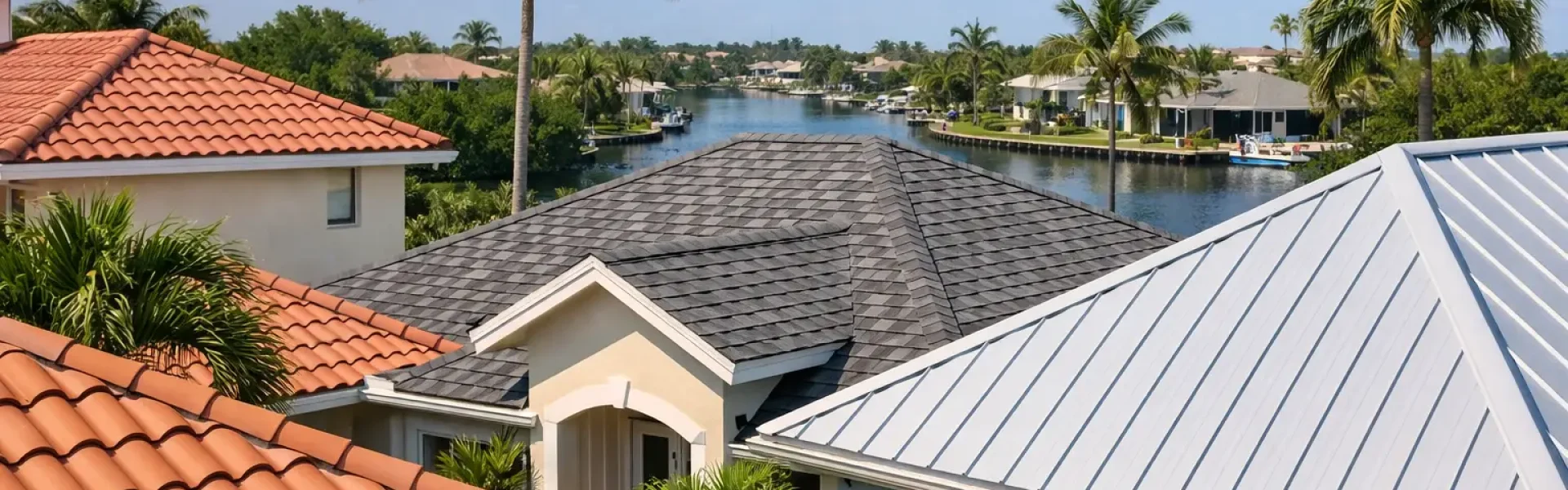
Metal roofing has become a strong choice for Florida homes because it handles wind well, sheds water efficiently, and reflects heat better than many traditional materials. For homeowners focused on durability and energy savings, metal often deserves a serious look.
A properly installed standing seam or screw-down metal roof can offer excellent longevity. It is also relatively lightweight compared with tile, which can matter depending on the structure of the home. In hurricane-prone areas, that lower weight and strong attachment can be a real advantage.
The trade-off is cost. Metal roofing usually requires a higher upfront investment than asphalt shingles. It can also be noisier during heavy rain if the assembly is not designed properly, although good installation and insulation usually reduce that concern. Appearance matters too. Some homeowners love the clean, modern look. Others prefer something more traditional.
Concrete or clay tile roofing
Tile roofs are common across South Florida for a reason. They offer strong curb appeal, hold up well in heat, and fit the architectural style of many homes in Miami, Fort Lauderdale, and nearby communities. Tile can also last a long time when maintained properly.
Concrete tile is often more budget-friendly than clay tile while still delivering a high-end look. Clay tile can offer excellent longevity and a distinctive appearance, but it usually comes at a higher price. Both options perform well in the Florida sun and are known for visual appeal that helps resale value.
Still, tile is not perfect for every home. It is heavy, so the structure must be able to support it. Individual tiles can crack from impact or foot traffic. Repairs may be more specialized than with shingles. In strong wind events, the system is only as reliable as the way it was installed and secured.
Asphalt shingles
Asphalt shingles remain popular because they are more affordable at the start and available in many colors and styles. For homeowners who need a practical balance between budget and protection, architectural shingles can be a reasonable option.
The challenge in South Florida is lifespan. Shingles generally do not last as long here as they might in cooler, less intense climates. Constant UV exposure, high humidity, and storms can accelerate wear. That does not mean shingles are a bad roof. It means expectations should be realistic.
If you choose shingles, product quality and installation standards matter even more. Homeowners should also pay attention to local code requirements and insurance considerations, especially in areas where older roofs may become harder to insure.
Flat and low-slope roofing systems
Many South Florida homes have flat or low-slope sections, especially over additions, patios, or modern-style designs. In these cases, the best solution is usually not tile or standard shingles but a membrane or rolled roofing system designed for low-slope performance.
These systems can work very well when installed by an experienced roofing contractor who understands drainage, flashing details, and waterproofing. The key issue is not appearance alone. It is preventing ponding water and protecting vulnerable transitions around edges, penetrations, and walls.
How to choose among the mejores techos para Florida
The right roof for your home depends on a few practical questions.
First, think about storm performance. If hurricane resistance is your top priority, metal and properly installed tile systems often lead the conversation, but the exact product, attachment method, and code compliance are what really determine performance.
Second, consider how long you plan to stay in the home. If this is your long-term property, spending more upfront on a longer-lasting system may make financial sense. If you expect to sell sooner, a cost-effective roof that improves appearance and satisfies insurance requirements may be the smarter move.
Third, look at the structure of the house. Not every home is a candidate for tile without structural review. That is one reason roof replacement should never be treated like a simple cosmetic upgrade.
Fourth, factor in maintenance. Tile roofs can look beautiful, but broken tiles and underlayment aging need attention over time. Metal roofs are durable, but coastal exposure calls for the right finishes and corrosion-resistant components. Shingles are easier on the budget initially, but they may need replacement sooner.
Cost matters, but value matters more
Homeowners naturally ask which roof is cheapest. That is a fair question, but it is not the only one worth asking. A lower-cost roof that needs replacement earlier, performs worse in storms, or creates insurance issues may cost more over time.
Value comes from the full picture: service life, wind resistance, energy efficiency, appearance, maintenance, and installation quality. In South Florida, the roof is one of the most important protective systems on the house. It affects comfort, resale value, and how prepared your home is when the weather turns serious.
Financing can also change the equation. A better roofing system may be more achievable when homeowners can spread the investment out rather than compromise on protection.
Why installation quality matters as much as material
Two homes can have the same roofing product and get very different results. The difference is often workmanship.
A roof replacement should include attention to the decking condition, underlayment, flashing, ventilation, and manufacturer-approved installation methods. Local experience matters because South Florida roofing is not just about putting on new materials. It is about understanding hurricane codes, coastal conditions, and the details that keep water out during high-wind storms.
That is why homeowners should look beyond the sales pitch and ask how the system will actually be built. A clean process, clear communication, and experienced installation are part of the product.
When it is time to replace instead of repair
Some roofs can be repaired successfully. Others are at the point where more patchwork stops making sense. If your roof has widespread aging, repeated leaks, visible wear, or is creating insurance headaches, replacement may be the more cost-effective path.
Age matters, but condition matters more. A professional inspection can tell you whether the roof still has dependable life left or whether you are putting money into a system that is already near the end.
For many South Florida homeowners, this is the moment when the conversation shifts from fixing a problem to making a smarter long-term upgrade. The best roofing choice is the one that protects your home now and reduces future stress when the next storm season arrives.
If you are weighing your options, start with a roof inspection grounded in local experience. A good contractor should help you compare materials honestly, explain the trade-offs clearly, and show you what makes the most sense for your home, not just what is easiest to sell. That kind of guidance is where real peace of mind begins.
