

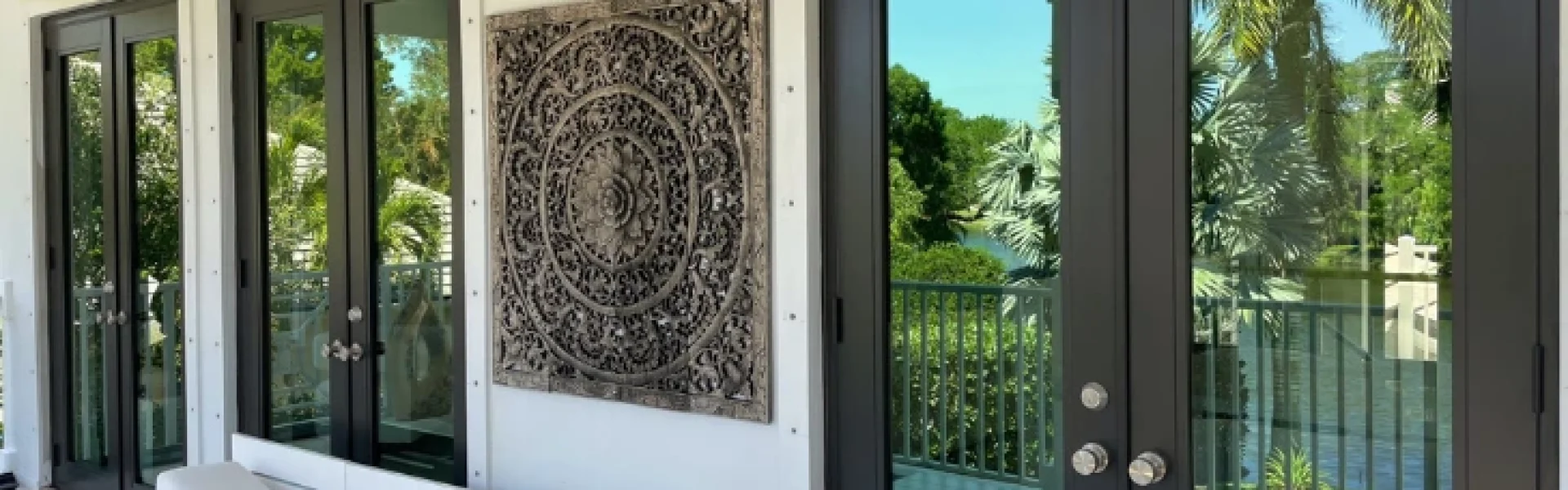
If you’ve been putting off hardening your South Florida home against hurricanes because of the upfront cost, the state just gave you a real reason to reconsider the timing. Starting July 1, 2026, Florida homeowners who install qualifying impact-resistant windows, exterior doors, and garage doors can claim a sales tax refund of up to $500 through a new program created under House Bill 7031E, the state’s 2026 tax omnibus package.
This is one of the most homeowner-friendly incentives South Florida has seen for storm protection in years, but it comes with rules that are easy to misread, starting with the fact that it isn’t the point-of-sale “exemption” many headlines suggest. Here’s what the law actually does, who qualifies, which products count, and how to make sure you don’t leave money on the table.
What the Program Actually Is: A Refund, Not an Automatic Discount
Despite how it’s often described online, this isn’t a discount applied at checkout. You will still pay full Florida sales tax when you purchase and install qualifying impact windows or doors. The relief comes afterward, in the form of a refund you request directly from the Florida Department of Revenue (DOR) once the products are installed.
That distinction matters for planning purposes. Homeowners shouldn’t expect a lower invoice from their contractor or retailer on installation day. Instead, budget for the full purchase price and sales tax, then treat the refund as money that comes back to you weeks later provided you keep the right paperwork from day one.
Key Dates: When the Program Runs
Effective date: July 1, 2026
Qualifying purchase window: July 1, 2026 through June 30, 2029
Application deadline: refund applications must be submitted no later than September 30, 2029
Not retroactive: purchases made before July 1, 2026 do not qualify, even if installation happens after that date
In practice, this gives homeowners roughly three full hurricane seasons to plan a purchase and still qualify, plus a short additional window after the purchase period closes to file the paperwork. Waiting until the final months of the program is riskier, since permitting backlogs and contractor scheduling tend to stretch out as the deadline approaches a pattern South Florida has seen with past incentive programs.
Who Qualifies: Homestead Status and Property Value Limits
This refund is built for primary residences, not investment properties or vacation homes. To qualify, a property generally must meet all of the following:
Carry an active Florida homestead exemption at the time of purchase
Have a “just value” (the county property appraiser’s assessed market value) of $700,000 or less
Be a site-built residential dwelling condominiums, mobile homes, rental properties, and commercial buildings are excluded from this particular program
If you’re not sure whether your property’s just value falls under the cap, your county property appraiser’s website will show it, and it’s worth checking before you commit to a purchase you’re expecting the refund to help offset.
What Products Qualify and What Doesn’t
The refund applies specifically to three product categories:
Impact-resistant exterior doors
Impact-resistant garage doors
To qualify, products must meet recognized impact-resistance testing standards such as ASTM International E1886 and E1996, American Architectural Manufacturers Association (AAMA) 506, or the applicable Florida Building Code Testing Application Standards (TAS). In practical terms, this means the product needs documented Florida Product Approval or, for Miami-Dade and Broward installations, a Notice of Acceptance (NOA) number. A standard, non-rated replacement window or a decorative door will not qualify, no matter how much sales tax you paid on it.
It’s also worth being clear about what’s outside the scope of this program: roofing materials are not included. If a full hurricane-hardening plan for your home includes a new roof alongside impact windows and doors, that portion of the project falls under separate state incentives most notably the My Safe Florida Home grant program rather than this sales tax refund. Homeowners planning a complete protection package (windows, doors, and roofing together) should treat these as two different incentive tracks that can be pursued at the same time, not one combined benefit.
How Much You Can Actually Get Back
The refund is capped at $500 per residence for the entire three-year program not per window, per door, or per year. If you pay, for example, $425 in Florida sales tax on a batch of qualifying impact windows purchased in one project, you can expect to recover that full $425, since it falls under the $500 ceiling. A homeowner who pays $900 in sales tax across multiple qualifying purchases during the program window would still be capped at the $500 maximum.
This means the refund is most valuable when you plan a single, well-documented project rather than several smaller purchases spread out over time both because it simplifies your paperwork and because there’s no benefit to “saving” refund room for later once you’ve reached the cap.
How to Apply: Documentation and Process
Because this is a refund rather than a point-of-sale exemption, the homeowner (or their authorized representative) is responsible for filing the claim with the Florida Department of Revenue. The process generally involves:
Keep every receipt from the start. Itemized invoices showing the purchase price and the Florida sales tax paid separately are essential a lump-sum contractor invoice without a tax line item can complicate your claim.
Collect product documentation. This includes manufacturer specification sheets or labels referencing the ASTM/AAMA/TAS standard met, along with the Florida Product Approval or Miami-Dade/Broward NOA number for each installed unit.
Retain permit and inspection records. Since impact window and door installations in South Florida require a building permit, your final inspection approval also serves as proof the qualifying product was actually installed, not just purchased.
Confirm your homestead and property value status. Have your homestead exemption documentation and your county property appraiser’s just-value figure on hand.
Submit the refund application. Homeowners file using the Department of Revenue’s refund forms Form DR-26S (Application for Refund, Sales and Use Tax) together with Form DR-26HH (Home Hardening Products Sales Tax Refund) attaching the supporting documentation above.
Allow time for review. The Department of Revenue generally has a review period to determine eligibility, followed by a separate window to issue payment once a claim is approved. Applying promptly after installation, rather than waiting until the program’s final months, gives you a cushion if the DOR requests additional documentation.
Missing paperwork is the single most common reason refund claims get delayed or denied in state programs like this one. The safest approach is to start a dedicated folder physical or digital, the day you sign a contract, and add every invoice, permit document, and inspection approval to it as the project progresses.
Why This Matters Right Now for South Florida Homeowners
This refund arrives at a moment when two pressures are already pushing South Florida homeowners toward impact protection: rising windstorm insurance premiums and the ongoing tightening of wind mitigation requirements across Miami-Dade, Broward, and Palm Beach counties. A $500 refund won’t offset the full cost of a whole-home window and door upgrade, but paired with the insurance premium reductions many carriers offer for verified impact-resistant products confirmed through a wind mitigation inspection it meaningfully improves the return on a project many homeowners were already planning to do eventually.
There’s also a practical, non-financial reason not to wait: contractor and permitting capacity in South Florida tightens every year as hurricane season approaches, and it tightens further as more homeowners rush to qualify before a program deadline. Starting the process early in the July 2026, June 2029 window, rather than in year three, gives you more flexibility on installer scheduling, product selection, and permit turnaround.
Homeowners weighing whether to act now or wait should also factor in the cost of doing nothing. Storm damage to unprotected windows and doors is one of the most common and most expensive sources of hurricane insurance claims in Miami-Dade, Broward, and Palm Beach counties, and a single claim can affect your premium and renewal terms for years afterward. Viewed against that backdrop, a $500 refund is a modest but welcome offset on a project that already pays for itself through lower risk and, in many cases, lower insurance costs.
How ProLux Helps You Get It Right
Qualifying for this refund depends entirely on documentation that most homeowners have never had to assemble before impact ratings, NOA numbers, itemized tax lines, and permit records that all have to match up. ProLux handles impact windows, impact doors, and roofing for homeowners across Miami-Dade, Broward, and Palm Beach counties, and every installation comes with the Florida Product Approval and Miami-Dade/Broward NOA documentation you’ll need to support a refund claim, along with full permit management from application through final inspection.
If you’re planning to take advantage of this program or you simply want to understand what a complete hurricane protection upgrade would cost and qualify for, including options like flexible financing schedule a free consultation with ProLux. We’ll walk through your home’s specific needs, confirm which products qualify, and make sure the paperwork trail is in place before you ever need it.
Frequently Asked Questions
Is this a discount at checkout, or do I have to apply for a refund afterward?
It’s a refund, not a point-of-sale discount. You’ll pay the full purchase price and the full Florida sales tax when you buy and install your impact windows or doors. Afterward, you submit an application to the Florida Department of Revenue, along with your receipts and product documentation, to receive the eligible tax amount back up to the $500 cap per residence.
What exactly counts as a “qualifying” impact window or door?
A qualifying product must be tested and rated to recognized impact-resistance standards ASTM International E1886 and E1996, AAMA 506, or the relevant Florida Building Code Testing Application Standards and carry documentation such as a Florida Product Approval number or a Miami-Dade/Broward Notice of Acceptance (NOA). Standard, non-impact-rated replacement windows or doors do not qualify, even if they’re new and even if you paid Florida sales tax on them.
Does my roof qualify for this refund too?
No. This particular program covers impact-resistant windows, exterior doors, and garage doors only roofing materials and roof replacement costs are not included. If your hurricane-hardening plan includes a new roof, that expense generally falls under a separate incentive, such as the My Safe Florida Home grant program, which homeowners can pursue alongside this sales tax refund rather than instead of it.
What if my property’s just value is close to the $700,000 cap?
Just value is the assessed market value your county property appraiser publishes for your home not your purchase price, your mortgage balance, or an appraisal you commissioned privately. If you’re near the threshold, check your county property appraiser’s website for the current just value before assuming you qualify, since exceeding $700,000 disqualifies the property from this program regardless of how much sales tax you paid on your project.
Can I use the refund across more than one project during the three years?
Yes, but only up to the combined $500 cap per residence for the entire July 2026–June 2029 window. If you complete a smaller window project one year and add impact doors the next, you can submit documentation for both but once your total approved refunds reach $500, no further amount is available for that property, even if you paid more in sales tax overall.
What documents should I start collecting before I file?
At minimum: itemized invoices showing the sales tax paid separately from the purchase price, manufacturer or installer documentation proving the impact-resistance standard met (with the Florida Product Approval or NOA number), your building permit and final inspection approval, and proof of your homestead exemption. Missing any one of these is the most common reason refund applications get delayed.
Does this refund replace insurance discounts for wind mitigation?
No, they’re separate benefits that can both apply to the same project. The sales tax refund comes from the state after your purchase; insurance premium reductions come from your carrier after a wind mitigation inspection confirms your home has qualifying impact-resistant features. Many South Florida homeowners installing impact windows and doors qualify for both at once.
What happens if I miss the September 30, 2029 filing deadline?
Based on the program as currently structured, refund applications submitted after September 30, 2029 are not expected to be accepted, even if the underlying purchase happened within the qualifying window. Because Department of Revenue guidance can be refined as the program rolls out, homeowners should confirm current deadlines directly with the DOR or a tax professional rather than filing at the last possible moment.
