

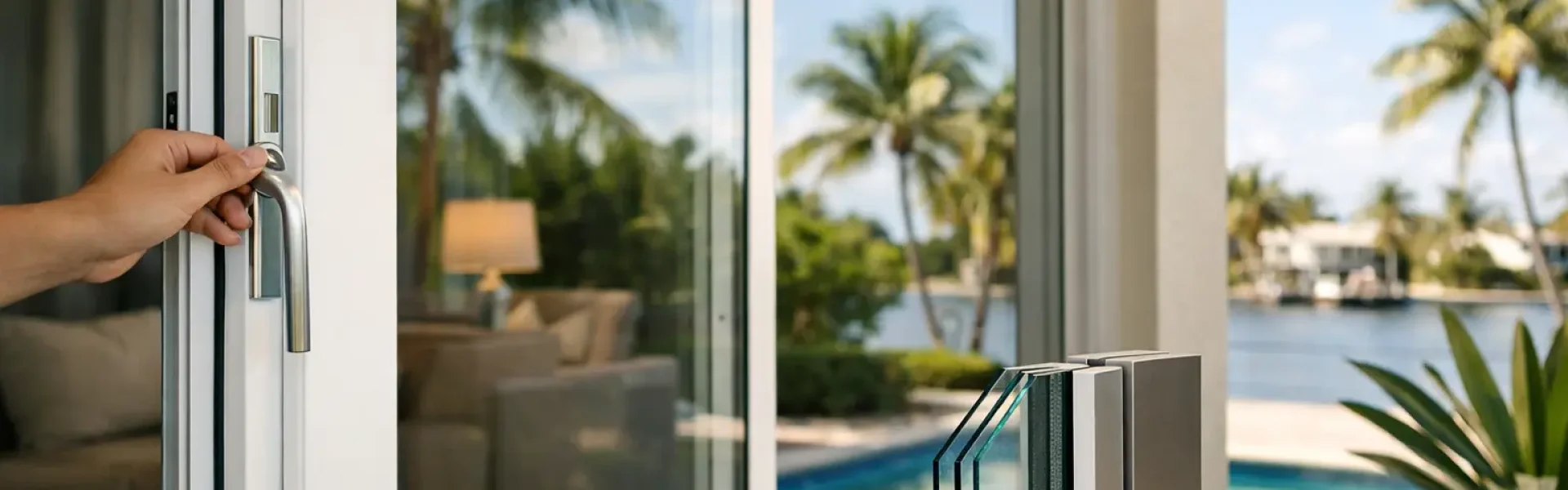
A front door in South Florida does more than make a first impression. It stands between your home and wind pressure, flying debris, heavy rain, heat, and humidity for months at a time. That is why homeowners asking como elegir puertas de impacto are usually not just shopping for looks. They are trying to make a smart, long-term decision that protects their property and adds value.
The right impact door should meet local code, fit the style of your home, hold up in a coastal climate, and be installed correctly. If one of those pieces is off, the door may still look good on day one but fall short where it matters most. A better approach is to evaluate the whole system, not just the panel or the glass.
Como elegir puertas de impacto without guessing
The first thing to understand is that impact doors are tested systems, not simple decorative upgrades. The frame, glass, hardware, anchoring, and installation method all work together. If you focus only on appearance or price, you can miss the factors that affect storm protection and long-term performance.
In South Florida, code compliance is not optional. Miami-Dade and Broward homeowners should look for products approved for the local wind zone and installation conditions. A door that works in another market may not be the right fit here. This is especially true for homes near the coast or in areas with higher exposure to wind and salt air.
That is also why product approval paperwork matters. You want to know exactly how the door was tested, what size configurations are approved, and what installation requirements apply. A door can be a strong product on paper and still fail to perform if it is installed outside its approved scope.
Start with the door’s job in your home
Not every impact door solves the same problem. For some homeowners, the priority is front entry protection and curb appeal. For others, it is a set of sliding glass doors facing the backyard, pool, or canal. The best choice depends on location, size, daily use, and how exposed that opening is during a storm.
A front entry door often needs to balance security, design, and privacy. You may want decorative glass, sidelites, or a modern oversized look. A rear patio door may need wider views, smoother operation, and strong water resistance in wind-driven rain. If the opening gets direct afternoon sun, energy performance becomes even more important.
This is where trade-offs come in. More glass can create a bright, open feel and boost resale appeal, but it may also raise the cost and make privacy planning more important. A bold custom design can elevate the exterior of the home, but only if the system is engineered and installed for that exact configuration.
Material choices affect performance and maintenance
Most homeowners compare impact doors by style first, but material has a major effect on durability and upkeep. Aluminum is a common choice in South Florida because it is strong, stable, and well suited to humid conditions. It can work especially well for larger openings and modern designs.
Fiberglass is another strong option, particularly for entry doors. It resists warping, can mimic the look of wood, and usually requires less maintenance than real wood in a coastal climate. For homeowners who want warmth in the design without the upkeep, fiberglass is often worth a close look.
Wood can be beautiful, but in South Florida it usually demands more maintenance and closer attention over time. Moisture, heat, and sun exposure can be tough on natural materials. If appearance is the main goal, many homeowners find that fiberglass gives them a similar visual effect with fewer long-term concerns.
Glass matters as much as the frame
When homeowners think of impact resistance, they often picture thick glass. That is part of the story, but not the full picture. Impact glass uses laminated layers designed to stay intact even if struck. That helps maintain the building envelope during a storm, which is critical when wind pressure rises.
Glass selection also affects comfort inside the home. In South Florida, low-E coatings and insulated options can help reduce solar heat gain and ease the load on your HVAC system. If your door faces west or south, this can make a noticeable difference in interior temperature and energy use.
Privacy should be considered early as well. Clear glass looks clean and open, but it may not be ideal for every entry. Frosted, tinted, or textured glass can give you more control without sacrificing natural light. The right choice depends on where the door sits and how much visibility you want from the outside.
How to compare ratings, approvals, and code compliance
If you are serious about how to choose impact doors, ask about testing and approvals before you get attached to a design. In South Florida, this step protects you from buying a product that looks right but is not appropriate for your opening or exposure level.
Look for doors that meet the required standards for impact and pressure. Ask whether the system has Miami-Dade approval if your project calls for it, and confirm that the exact configuration you want is covered. Size, swing direction, glass layout, and hardware can all affect approval.
Water performance is another detail homeowners should not overlook. During a storm, wind-driven rain can be as damaging as impact itself. A door should be able to resist water infiltration under pressure, especially on exposed elevations. If a proposal focuses only on aesthetics and price, that is a sign to ask more questions.
Installation quality is not a small detail
A premium door installed poorly can become an expensive disappointment. Proper installation affects structural performance, operation, weather resistance, and lifespan. In South Florida, the installer should understand local code, attachment methods, substrate conditions, and permit requirements.
This is one reason many homeowners prefer working with a company that manages the process from measurement to permitting to final installation. It reduces the chance of miscommunication between suppliers, installers, and inspectors. It also makes it easier to get clear answers if adjustments are needed.
Ask how the opening will be evaluated before the order is placed. Existing conditions matter. Concrete block, wood framing, older thresholds, and stucco details can all affect the installation approach. A reliable contractor will inspect the opening carefully instead of quoting from a photo or rough dimensions.
Budgeting for value, not just price
Impact doors are an investment, and price differences can be significant. Size, material, glass type, finish, hardware, and customization all affect cost. So does the complexity of installation. A simple front door replacement is very different from reworking a large patio opening.
The lowest quote is not always the best value. If one proposal skips permit details, uses vague product descriptions, or glosses over installation scope, it may leave out costs you will face later. A stronger estimate is transparent about product specifications, labor, approvals, and timeline.
Financing can also be part of a smart decision, especially if you are upgrading multiple openings at once. Many homeowners choose to improve safety, efficiency, and appearance together rather than patching one area at a time. If that fits your goals, make sure the payment options are clear and realistic.
Aesthetic fit still matters
Protection comes first, but design still matters because your doors affect the look and feel of your home every day. The right impact door should complement the architecture, not fight it. Clean modern lines may work beautifully on a contemporary home, while a more traditional property may benefit from panel detail, decorative glass, or a warmer finish.
Color and hardware deserve more attention than they usually get. In bright South Florida light, finishes can read differently than they do in a showroom or brochure. Hardware should also feel substantial and match the level of the door system. A strong door with cheap-looking handles can undermine the entire upgrade.
If you are replacing windows or planning roofing work, think about the exterior as a whole. A coordinated approach often creates a better result than making isolated decisions one product at a time. That is where an experienced local team can be especially helpful.
Common mistakes homeowners make
One common mistake is choosing a door based mainly on appearance and assuming all impact products perform the same. They do not. Another is underestimating the role of installation. Even the best-rated product depends on proper anchoring, sealing, and finish work.
Homeowners also sometimes choose more glass than they really want once privacy and sun exposure become part of the conversation. Others go too basic and later wish they had selected a design that elevated the front of the home. The right balance usually comes from seeing samples, discussing the opening in context, and reviewing real product specifications.
For South Florida homeowners, this decision is not just about hurricane season. It is about daily comfort, insurance considerations, noise reduction, energy performance, and peace of mind. Companies like Pro Lux Construction help homeowners work through those details clearly so the final choice makes sense on paper and in real life.
If you are evaluating options now, take your time where it counts. Ask about approvals, installation, water resistance, maintenance, and long-term performance before focusing on finishes. A well-chosen impact door should look right, operate smoothly, and stand up to South Florida weather for years to come.
