
A cracked window during a South Florida storm is not just a repair bill. It can become the point where wind pressure, rain, and flying debris turn a manageable weather event into major interior damage. If you are wondering how to hurricane proof windows, the right answer depends on your home, your budget, and how much protection you want before the next storm warning shows up.
For most homeowners in Miami-Dade and Broward, window protection is about more than code compliance. It is about keeping your family safer, reducing water intrusion, and protecting the long-term value of your home. Some solutions are temporary and budget-friendly. Others are permanent upgrades that improve security, efficiency, and curb appeal year-round.
What hurricane protection for windows really means
When people think about storm protection, they often picture broken glass. The bigger problem is usually what happens after the glass fails. Once wind enters the home, pressure can build fast. That added pressure can damage doors, roofing components, ceilings, and interior finishes.
That is why learning how to hurricane proof windows is not just about making glass harder to break. It is about creating a stronger building envelope. The goal is to help your home resist impact, stay sealed against rain, and perform better under extreme weather conditions.
In South Florida, that usually means choosing between shutters, impact-resistant window systems, or a combination of both. The best option depends on the age of the home, the condition of your current windows, local code requirements, and whether you want a short-term fix or a long-term upgrade.
The most effective ways to hurricane proof windows
Install impact windows for permanent protection
If you want the highest level of convenience and year-round value, impact windows are often the strongest long-term solution. These windows are built with laminated glass and reinforced framing designed to withstand debris strikes and high winds. Even if the glass cracks, the interlayer helps hold it together instead of shattering inward.
For homeowners who do not want to scramble for panels before every storm, this matters. Impact windows are always in place. There is no last-minute installation and no need to store bulky materials in the garage.
They also bring benefits beyond hurricane season. Many homeowners notice better noise reduction, improved energy efficiency, and a more updated exterior appearance. That makes them a protection upgrade and a property-value upgrade at the same time.
The trade-off is cost. Impact windows require a bigger upfront investment than shutters or panels. But for many South Florida homeowners, the convenience, durability, and daily performance justify that cost over time.
Add hurricane shutters if your existing windows are still in good shape
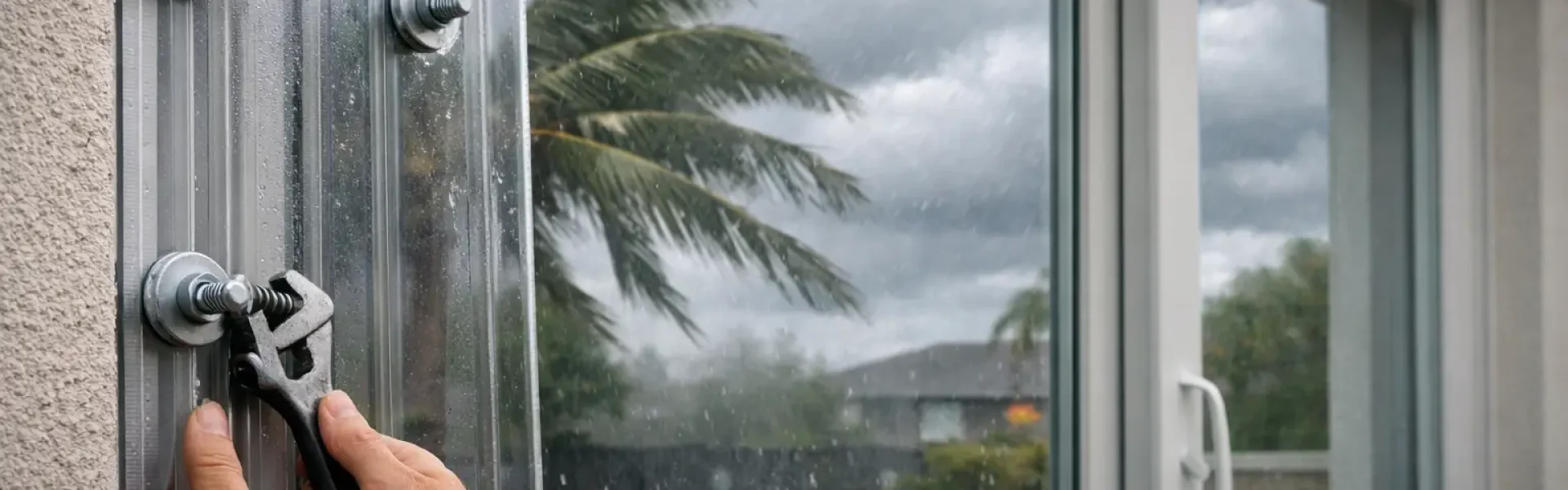
Shutters can be an effective way to improve storm protection without replacing every window immediately. Options include accordion shutters, roll-down shutters, Bahama shutters, and removable storm panels. Each comes with a different balance of appearance, price, ease of use, and storage needs.
Accordion and roll-down shutters are popular because they are easier to deploy quickly. Storm panels usually cost less, but they take more effort to install before a storm and require storage space when not in use. Bahama shutters can add style and shade, though they may not fit every home design or every opening.
Shutters can be a practical choice if your current windows are structurally sound and you want storm protection without a full window replacement right away. The downside is that they only work if you close them in time. If a storm track changes quickly or you are out of town, that delay can become a real problem.
Reinforce weak points around the window opening
A window system is only as strong as its installation and surrounding structure. Even a quality product can underperform if the frame attachment, sealant, or substrate is compromised. That is one reason professional installation matters so much in hurricane-prone areas.
If your home has older windows, worn seals, wood rot, or cracked stucco around the opening, those conditions should be addressed as part of your storm-prep plan. Water intrusion often starts at the perimeter, not just through the glass itself. Re-caulking, repairing damaged framing, and correcting installation issues can improve resistance to wind-driven rain.
This is also where a home-specific inspection helps. Two homes on the same block can need very different solutions depending on age, exposure, and previous upgrades.
How to hurricane proof windows without wasting money
The biggest mistake homeowners make is paying for the wrong level of protection in the wrong place. A full replacement may be the right move for one house and unnecessary for another. A lower-cost shutter system may be enough if the current windows are newer and well-installed. On the other hand, putting shutters over failing windows can delay a problem, not solve it.
Start by looking at three factors: the age of your current windows, visible wear or leaks, and how easy it is for you to prepare before a storm. If your windows are drafty, difficult to open, or showing signs of moisture damage, replacement may make more sense than investing in add-on protection. If your windows are in decent condition and budget is the main concern, shutters could be the smarter first step.
Insurance and financing can also affect the decision. Some homeowners find that a permanent upgrade is more manageable when monthly financing is available. Others are focused on immediate storm readiness and prefer to phase improvements over time.
What not to rely on during hurricane season
There is still a lot of confusion around quick fixes. Plywood can offer some temporary debris protection, but it is not a substitute for code-compliant hurricane protection. It also takes time to install, can damage the exterior of the home, and does nothing for energy efficiency or curb appeal.
Window film is another product that gets misunderstood. Standard safety or solar film may help with glass breakage in certain situations, but it does not turn a standard window into a true impact-rated system. That distinction matters. In a serious storm, marketing claims do not protect your home – tested products and proper installation do.
Tape on glass is not an effective solution. It does not meaningfully strengthen the window and can create a false sense of security.
Why code compliance and installation quality matter
In South Florida, hurricane protection is not something to improvise. Products need to meet local performance standards, and installation has to follow the approved method for that product and opening type. The glass alone is not the whole story. The frame, anchor pattern, substrate, and seal all matter.
That is why homeowners should pay attention to who is doing the work, not just what product is being sold. A professionally installed impact window or shutter system is designed to perform as a tested assembly. If any part of that assembly is handled poorly, performance can suffer when you need it most.
This is especially important in older homes, homes near the coast, and properties that have had multiple renovations over the years. Existing conditions can affect what is possible and what needs to be corrected before a new system is installed.
Choosing the right option for your South Florida home
If convenience, premium protection, and long-term home value are your priorities, impact windows are usually the strongest choice. If budget is the main driver and your current windows are still in solid condition, shutters may be the better fit for now. Some homeowners even choose a mixed approach, using impact windows in main living areas and shutters in other parts of the home.
The right answer comes down to your goals. Do you want permanent protection with everyday benefits? Are you trying to improve appearance as well as storm readiness? Do you need a phased plan that makes financial sense while still improving safety now?
Those are the questions worth asking before the next storm season, not during it. A clear inspection and honest guidance can save money, reduce stress, and help you choose protection that actually fits your home.
For homeowners who want a more durable, polished, and reliable solution, working with a local company that understands South Florida conditions makes a difference. Pro Lux Construction helps homeowners evaluate window protection options with a focus on code-compliant products, professional installation, and practical next steps.
Storm prep feels a lot more manageable when your windows are no longer a question mark.
