

The storm may be over, but the next few hours matter. In South Florida, roof damage after a hurricane is not always obvious from the ground, and what looks minor can turn into leaks, mold, and structural problems fast. If you are wondering como inspeccionar techo despues huracan, the first priority is safety, the second is documentation, and the third is knowing when a professional inspection is the smarter move.
A roof takes the full force of wind, rain, flying debris, and pressure changes. Even a newer roof can suffer lifted shingles, cracked tiles, damaged flashing, or hidden water intrusion. For homeowners in Miami-Dade and Broward, a careful post-storm inspection can help protect both your home and your insurance claim.
How to safely inspect a roof after a hurricane
Before you look for damage, make sure the property is safe. Do not climb onto the roof right after a hurricane. Wet surfaces, loose materials, and hidden structural weakness can make a bad situation worse. A visual inspection from the ground is the safest place to start.
Walk the perimeter of your home slowly. Look up at the roofline from multiple angles and pay attention to anything that seems uneven, missing, shifted, or dented. If you have binoculars, use them. They can help you spot damage without taking unnecessary risks.
Also look around the yard and driveway. Pieces of shingles, tiles, flashing, soffit, or gutter material on the ground often tell you a lot about what happened above. If a tree limb landed near the house, inspect that area carefully from a distance. Impact damage can break roofing materials even when the surface does not collapse.
If there are downed power lines, a sagging roof section, active leaking near electrical fixtures, or signs that part of the structure moved during the storm, stay out of the area and call for professional help immediately.
What to check from the outside
The type of damage you find depends a lot on your roofing system. South Florida homes commonly have tile roofs, shingle roofs, and flat or low-slope sections, and each one fails a little differently under hurricane conditions.
Shingles, tiles, and exposed roof surfaces
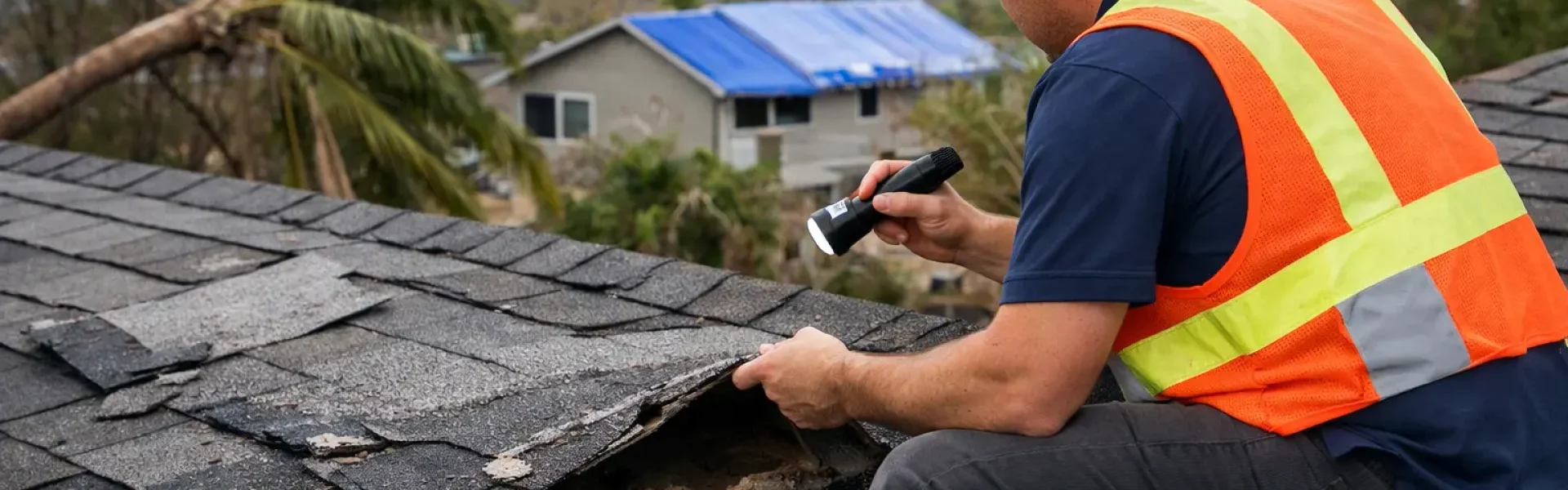
On shingle roofs, look for missing tabs, curling edges, torn sections, bruising from debris, and areas where the pattern no longer looks uniform. Wind can break the seal on shingles even if they do not blow off completely, which means the roof may be more vulnerable in the next storm.
On tile roofs, focus on cracked, slipped, or missing tiles. One broken tile may not seem urgent, but it can allow water to work its way into the underlayment. In many cases, the visible tile damage is only part of the issue.
On flat or low-slope areas, look for punctures, bubbles, lifted seams, or debris that may have scraped the surface. Ponding water that does not drain after the storm can also point to drainage or membrane problems.
Flashing, ridges, and roof penetrations
Some of the most common post-hurricane leaks start around flashing. Check the metal areas around chimneys, vents, skylights, valleys, and where roof sections meet walls. If flashing is bent, lifted, or detached, water can get in quickly.
Ridge caps and hip lines also deserve attention. High winds tend to hit these vulnerable points hard. If they look uneven or partially detached, that is a red flag.
Gutters, soffit, and fascia
Your roof system includes more than the surface material. Gutters torn loose from the fascia, sagging soffit panels, or bent drip edge can all signal wind damage or water backup. In some cases, these parts fail first and expose the roof edge to more moisture.
If you see granules from shingles collecting in gutters or at downspout exits, that may indicate surface wear accelerated by the storm. It is not always a full replacement issue, but it should be evaluated.
What to check inside the house
A good post-hurricane roof inspection always includes the interior. Sometimes the roof damage is subtle outside but obvious once water starts moving into the attic or ceiling cavities.
Start in the attic if you can enter safely. Use a flashlight and look for wet insulation, dark stains on wood, active drips, moldy odors, or sunlight coming through where it should not. Even small water trails matter. They often show the path of a leak before it becomes visible in the living space.
Then check ceilings, upper walls, and around windows and doors. Water stains, bubbling paint, warped trim, and damp drywall can all point to roof or flashing damage. Keep in mind that water does not always drip straight down. It can travel along framing before it appears indoors, so the source may be several feet away from the visible stain.
If your home has recessed lighting or ceiling fans, be especially cautious around any moisture in those areas. Turn off power to affected rooms if needed and avoid touching wet fixtures.
Document everything for insurance
One of the most practical parts of learning como inspeccionar techo despues huracan is knowing how to document what you find. Clear records can help support an insurance claim and make the repair process more straightforward.
Take wide photos of each side of the house, then close-up photos of any visible damage. Include fallen debris, damaged gutters, interior stains, and any water entry points. If possible, add date-stamped notes describing what you saw and when you noticed it.
Do not throw away broken roofing materials that landed on the ground until you have photographed them. If emergency tarping or temporary repairs are needed to reduce further damage, document the condition before and after. Keep receipts for any emergency services, cleanup, or moisture mitigation.
What you should not do is start major repairs before the damage is properly assessed, unless waiting would create more serious harm. Temporary protection is usually appropriate. Permanent repairs should be based on a full inspection.
When a professional roof inspection makes more sense
There is a point where a homeowner inspection stops being useful. If your roof is steep, high, slippery, older, or made of fragile tile, climbing up is simply not worth the risk. The same goes if you suspect structural damage or cannot tell whether the issue is cosmetic or functional.
A professional roofer can identify problems that are easy to miss from the ground, including lifted materials, failed seals, underlayment exposure, flashing separation, and impact damage around penetrations. They can also tell you whether a repair is likely enough or whether the storm shortened the roof’s remaining life in a meaningful way.
For South Florida homeowners, this matters because hurricane damage is not always a single-event issue. A roof can survive one storm, look mostly intact, and still be weakened enough to fail faster in the next season. A thorough inspection gives you a clearer picture of your real condition, not just the visible surface.
If you want peace of mind after a major storm, having a local roofing specialist assess the roof can save time, reduce guesswork, and help you make decisions with confidence. Companies like Pro Lux Construction work with homeowners who want that process handled clearly and professionally, especially when timing, protection, and long-term value all matter.
Common mistakes after a hurricane
The biggest mistake is getting on the roof too soon. The second is assuming no ceiling leak means no roof damage. The third is waiting too long because the damage seems small.
Small breaches can become expensive repairs in South Florida’s heat and humidity. Moisture trapped under roofing materials or inside attic spaces creates ideal conditions for deterioration. What starts as one loose tile or lifted shingle can turn into underlayment damage, wood rot, insulation loss, and interior repairs.
Another mistake is hiring the first person who knocks on the door after a storm. Post-hurricane roofing decisions should be based on licensing, experience, documentation, and a clear scope of work. A rushed repair without proper evaluation can create more problems than it solves.
What to do next if you find damage
If your inspection shows signs of roof damage, act quickly but calmly. Protect the home from further water intrusion, document the issue thoroughly, and arrange for a qualified inspection. If the damage appears limited, you may only need targeted repairs. If the storm affected multiple areas or exposed underlying problems, a larger roofing solution may be the better investment.
For many homeowners, the real goal is not just fixing what broke. It is making sure the home is better prepared for the next storm. That may mean improved roofing materials, stronger attachment methods, updated flashing details, or a broader exterior protection plan.
After a hurricane, your roof does not need guesses. It needs a careful eye, a safe process, and honest guidance. A timely inspection today can protect your home, your budget, and your peace of mind before the next weather alert shows up on your phone.
