
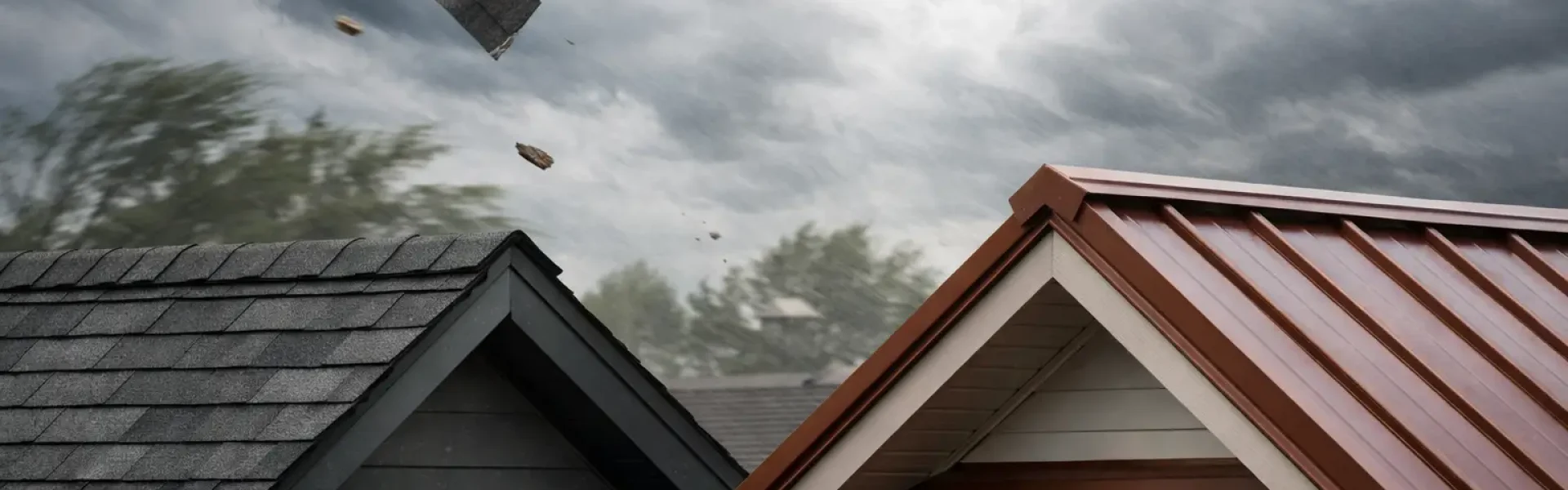
When a summer storm starts tracking toward South Florida, most homeowners do not worry about their roof color or style. They worry about whether it will stay in place. If you are asking what roof is best for high winds, the answer is not just about material. It is about the full roofing system – shape, attachment method, underlayment, edge protection, and the quality of installation.
For homes in Miami-Dade and Broward, that distinction matters. A roof can look great from the street and still be vulnerable when uplift pressure hits the edges, corners, and overhangs. The best high-wind roof is the one designed and installed to resist those exact failure points.
What roof is best for high winds in South Florida?
For many South Florida homes, metal roofing and concrete tile roofing are among the strongest options for wind resistance when they are properly engineered and installed. Architectural asphalt shingles can also perform well, but only if the product is rated for high winds and the installation meets strict local code requirements.
That said, there is no single best roof for every house. The right choice depends on your home’s structure, your budget, the slope of the roof, neighborhood requirements, and how much you value lifespan, energy performance, and appearance.
In hurricane-prone areas, homeowners should think beyond the roofing material itself. A premium roof covering installed over a weak deck attachment or poor edge detail can still fail. Wind events expose shortcuts quickly.
The roofing materials that perform best in high winds
Metal roofing
Metal roofing is one of the strongest choices for high-wind performance. Properly installed standing seam or screw-down metal systems can offer excellent resistance to uplift, and many systems are tested for severe wind conditions. Metal is also lighter than tile, which can be an advantage for some structures.
Another reason homeowners like metal in South Florida is durability. It resists rot, sheds water efficiently, and reflects heat well, which can help with energy costs. From a curb appeal standpoint, modern metal roofs also look far more refined than many people expect.
The trade-off is cost. Metal roofing usually costs more upfront than shingles. It also has to be installed by a contractor who understands the exact fastening patterns, panel details, and flashing requirements for high-wind zones. A poorly installed metal roof is not a premium roof.
Concrete and clay tile roofing
Tile roofs are a familiar sight across South Florida for good reason. Concrete and clay tile can deliver strong wind performance when the system is designed correctly and installed to code. Many homeowners also prefer the upscale appearance and long service life.
Tile performs best when each component is treated as part of a system. The attachment method, fasteners, foam or mechanical set, underlayment, and edge details all matter. In high winds, loose or improperly secured tiles can break free, even if the rest of the roof is in decent condition.
Tile is heavier than other materials, so the home must be able to support that load. Repairs can also be more specialized. If long-term value and style are priorities, tile is often an excellent fit, but it is not the cheapest route and it is not forgiving of poor installation.
Architectural asphalt shingles
High-quality architectural shingles can be a practical option for homeowners who want a more affordable roof replacement without giving up wind protection. Many premium shingles are manufactured with high-wind ratings and improved adhesive performance.
Still, shingles are generally not the top-tier option for extreme wind resistance compared with well-installed metal or tile systems. They depend heavily on proper nailing, starter strip placement, underlayment quality, and attic ventilation. In a hurricane zone, every one of those details matters.
For the right home, shingles can make sense. They offer design flexibility and lower upfront cost, but homeowners should be realistic about lifespan and storm resilience compared with more premium systems.
Roof shape matters more than many homeowners realize
If you want to know what roof is best for high winds, material is only half the conversation. Roof shape has a major effect on how wind moves around the home.
Hip roofs generally perform better in high winds than gable roofs. A hip roof has slopes on all four sides, which helps reduce pressure concentrations. Gable roofs, by contrast, can catch wind more directly at the ends, increasing the risk of uplift if they are not reinforced properly.
That does not mean every gable roof is unsafe. It means the design and bracing need to be taken seriously. If your home already has a gable roof, upgrades to decking attachment, underlayment, and edge securement may still significantly improve performance.
Roof pitch also plays a role. Extremely steep or very low-slope roofs can behave differently under wind loads, and the best material for one pitch may not be ideal for another. This is one reason a local inspection matters more than broad national advice.
The installation details that make or break wind resistance
Homeowners often compare roofing samples in a showroom or online and assume the product determines the outcome. In reality, wind resistance is often won or lost in the installation.
The roof deck needs to be sound and properly attached. The underlayment must be suitable for the climate and installed correctly to help protect the home if the outer covering is damaged. Flashing around penetrations, valleys, and transitions has to be secure and precise.
Edge metal is especially important. Roof edges and corners are some of the first places wind tries to lift. If those areas are weak, failure can spread quickly across the roof system.
Fastener type, spacing, and placement matter too. So does compliance with Florida codes and product approval requirements. In South Florida, a roof should never be treated like a generic commodity. It is part of your storm protection strategy.
How to choose the best roof for your home
The best choice usually comes down to balancing four priorities: wind resistance, budget, appearance, and long-term value.
If your top priority is maximum storm performance and lifespan, metal roofing is often a strong contender. If you want a premium look that fits many South Florida neighborhoods and offers excellent durability, concrete tile may be the better fit. If budget matters most and you still want solid protection, architectural shingles can be a sensible option when paired with the right system and installer.
You should also think about insurance, maintenance, and resale value. A more durable roof can reduce the chances of storm-related damage and may support long-term property value. It can also make a home more attractive to future buyers who understand what it means to own property in a hurricane region.
For many homeowners, financing can make a stronger roofing system more achievable now rather than later. That can be a smart move if your current roof is aging or showing signs of vulnerability before storm season.
Signs your current roof may not be ready for high winds
Even a roof that has not leaked yet may still be at risk during the next major storm. Warning signs include loose or missing shingles or tiles, lifted edges, soft decking, previous patchwork repairs, rusted flashing, and signs of water intrusion in the attic or ceilings.
Age matters too. Roofing materials break down over time under intense sun, humidity, salt air, and repeated storm exposure. South Florida roofs age differently than roofs in milder climates, which is why local experience matters when evaluating condition.
If your roof is older and you are unsure how it would perform in a hurricane, a professional inspection is the right next step. A clear assessment can tell you whether you need repairs, reinforcement, or full replacement.
Why local expertise matters
A roof that performs well in another state is not automatically the best roof here. South Florida building codes, product approvals, wind exposure, and storm history require a more specialized approach.
That is why homeowners should work with a contractor who understands local permitting, hurricane-rated products, and the details that protect homes in this market. At Pro Lux Construction, that means helping homeowners look at the full picture, not just the surface material.
The strongest roof for high winds is the one built for your specific home, your location, and the realities of South Florida weather. If you are weighing your options, the smartest next move is a professional inspection and a clear conversation about what will protect your home for the long haul.
A good roof should do more than look finished from the driveway. It should help you feel prepared when the forecast turns serious.
