

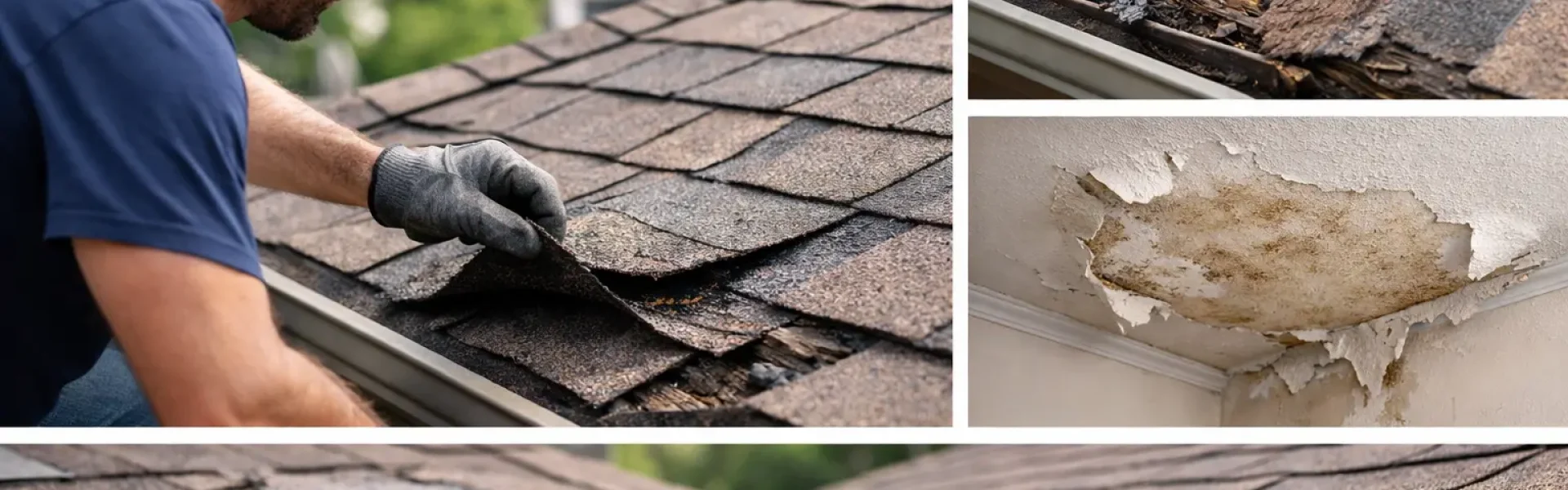
A roof rarely fails all at once. More often, it gives you warnings – and in South Florida, those warnings can show up faster after intense sun, heavy rain, humidity, and hurricane season. If you have been noticing small leaks, missing shingles, or stains on your ceiling, those may be early signs you need a new roof, not just another quick repair. If you’re noticing these warning signs, the best next step is a professional inspection. Pro Lux Construction offers free roof evaluations for South Florida homeowners to identify whether repair or full replacement is the right solution.
For homeowners in Miami-Dade and Broward, waiting too long can turn a manageable project into interior damage, mold issues, and higher insurance concerns. The key is knowing what your roof is telling you before the next major storm puts it to the test.
The most common signs you need a new roof
Understanding the signs you need a new roof in South Florida is especially important due to the region’s extreme weather and hurricane exposure.
Some roofing problems are minor. Others point to a system that is simply wearing out. The difference matters, because repeated patchwork on an aging roof often costs more over time than replacing it with a properly installed new system.
1. Your roof is near or past its expected lifespan
Age alone does not always mean replacement, but it is one of the clearest indicators. Asphalt shingle roofs often last around 15 to 25 years in ideal conditions, while tile and metal can last longer. In South Florida, though, heat, salt air, UV exposure, and storm activity can shorten that timeline.
If your roof is approaching the end of its service life, it makes sense to have it evaluated even if it looks acceptable from the ground. A roof can appear intact while the underlayment, fasteners, or flashing are already failing.
2. You keep dealing with leaks
One isolated leak after a major storm may be repairable. Ongoing leaks in different areas are a different story. Water intrusion around vents, valleys, skylights, or roof-to-wall transitions often signals broader deterioration.
The real concern is not just the drip you can see. Water can travel behind walls, soak insulation, stain ceilings, damage framing, and create conditions for mold. If leaks keep returning after repairs, the roof system may no longer be reliable.
3. Shingles are curling, cracking, or going missing
For shingle roofs, surface wear is a major warning sign. Curling edges, cracking, bald spots, and missing shingles all reduce your roof’s ability to shed water and resist wind uplift. That becomes especially risky in hurricane-prone areas.
A few damaged shingles can sometimes be replaced. But widespread deterioration usually means the roof has lost too much integrity to trust through another storm season.
4. You see granules in gutters or around downspouts
Asphalt shingles shed granules as they age. A small amount is normal over time, but heavy granule loss is a sign that the shingles are breaking down. Once that protective surface wears away, the material underneath is more exposed to UV damage and moisture.
If you are finding a noticeable buildup of granules after rainstorms or roof cleaning, it is worth taking seriously. This is often one of the signs homeowners overlook until leaks begin.
5. The roof looks uneven or is starting to sag
A sagging roofline is not a cosmetic issue. It can point to trapped moisture, rotted decking, or even structural problems beneath the roofing material. If part of your roof appears to dip, wave, or bow, that calls for prompt professional attention.
This is one of the clearest signs you need a new roof – and possibly more than just a new surface. The longer it sits, the more expensive the repair can become.
Storm damage does not always look dramatic
South Florida homeowners often expect storm damage to be obvious. Sometimes it is. After high winds, you may see torn shingles, displaced tiles, or debris impact. But damage can also be subtle.
Wind can loosen materials without fully removing them. Rain can exploit small openings around flashing. Even if your roof looks fine from your driveway, hidden damage may already be compromising its performance. That is why post-storm inspections matter, especially after hurricanes or strong summer weather events.
👉 Schedule a Free Roof Inspection
Storm damage is not always visible from the ground. A professional inspection can help you identify hidden issues before they turn into costly interior damage.
6. Flashing is rusted, lifted, or separating
Flashing protects some of the most vulnerable parts of the roof, including chimneys, vents, valleys, and wall connections. When flashing corrodes, cracks, or pulls away, water often gets in long before the main field of the roof fails.
In some cases, flashing can be repaired. But if multiple areas are failing or the surrounding roofing materials are also aged, replacement may be the smarter long-term decision.
7. Ceiling stains and interior moisture keep appearing
Brown spots on ceilings, bubbling paint, peeling drywall, and musty smells are often interior clues that the roof is no longer doing its job. Homeowners sometimes treat these as isolated indoor issues when they are actually signs of a persistent roofing problem.
By the time moisture shows up inside, the damage has usually been developing for a while. In a humid climate, that is not something to ignore.
8. Your energy bills are creeping up
Not every spike in cooling costs comes from the roof, but an aging or failing roof can absolutely affect energy efficiency. Poor ventilation, compromised underlayment, and moisture intrusion can all make it harder to maintain indoor comfort.
If your home feels hotter upstairs, your AC seems to run constantly, and your roof is older, it may be time to look at the roofing system as part of the problem. A new roof can improve protection and, depending on materials and design, help support better energy performance.
9. Repairs are becoming frequent and expensive
There is a point where repair stops being cost-effective. If you have patched one area, then another, then another, you may be spending money to delay the inevitable instead of solving the issue.
This is especially true when the roof is older or has mixed repairs from different storms over the years. A full replacement gives you a fresh system designed to work together, rather than a series of temporary fixes.
When repair makes sense – and when it does not
A good roofing contractor should be honest about this. Not every issue means you need a full replacement. If the roof is relatively new, the damage is limited, and the underlying structure is sound, a repair may be the right move.
But if the roof is aging, leaking in multiple spots, or showing widespread wear, replacement is often the better investment. It can protect your home more effectively, reduce future maintenance, and give you more confidence when severe weather is approaching.
For South Florida homeowners, there is also the code and insurance side to consider. Roofing systems must meet strict requirements defined by the Florida Building Code https://www.floridabuilding.org/, especially in high-velocity hurricane zones where wind resistance and proper installation are critical.
If you’re unsure whether your roof needs repair or full replacement, getting a professional evaluation can save you time, money, and future stress.
👉 Get a Free Quote for Your Roofing Project
Why timing matters in South Florida
Putting off roof replacement is risky anywhere, but the stakes are higher here. A roof that barely gets by during a mild week may fail under wind-driven rain or hurricane conditions. Water intrusion during a major storm can damage flooring, cabinetry, drywall, electrical systems, and personal belongings in a matter of hours.
Replacing a roof before it reaches that point gives you more control. You can compare options, plan your budget, and choose materials that fit your home’s style and protection needs, rather than rushing into an emergency project after damage has spread.
What to do if you notice signs you need a new roof
Start with a professional inspection. That gives you a clear picture of whether you are dealing with repairable damage, age-related wear, or a roof that is ready for replacement. It also helps to document storm-related issues early before they worsen.
Ask practical questions about remaining lifespan, vulnerable areas, ventilation, material options, and what replacement would involve. A quality contractor should explain the process clearly, outline financing if needed, and help you understand what makes sense for your home – not pressure you into a decision.
If you want a dependable local opinion, Pro Lux Construction works with South Florida homeowners to evaluate roofing conditions, recommend the right solution, and install roofing systems built for this climate.
If your roof is showing signs of wear, leaks, or storm damage, taking action early can prevent much bigger problems.
👉 Schedule Your Free Roof Inspection with Pro Lux Construction
Get a clear evaluation of your roof and expert guidance tailored to South Florida conditions.
👉 Ask About Financing – Pay in 24 Months
You can upgrade your roof without delaying the project.
👉 Call Now or Request Your Free Quote Online
