

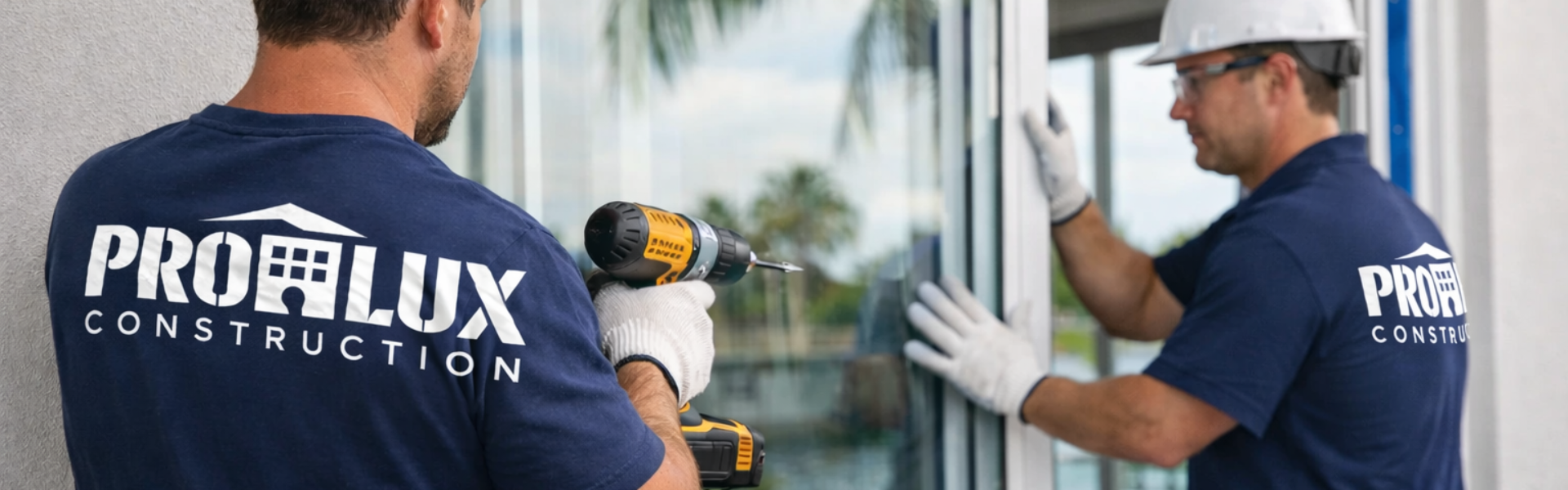
If you are planning to replace your windows before the next storm season, understanding the impact window installation process helps you make better decisions from day one. For South Florida homeowners, this is not a small cosmetic upgrade. It is a structural improvement that affects storm protection, energy efficiency, insurance value, and how your home performs for years.
If you’re planning to replace your windows before hurricane season, the best first step is a professional evaluation. Pro Lux Construction offers free inspections to help South Florida homeowners understand their current window condition, installation requirements, and upgrade options.
A good installation should feel organized, not confusing. You should know what happens before materials arrive, what crews do on installation day, and what separates quality work from shortcuts. That clarity matters because even a high-performing window can underdeliver if the installation is rushed or poorly executed.
Why the impact window installation process matters
Homeowners often focus on the product first, and that makes sense. Glass strength, frame material, design, and code approval all matter. But installation is where the real-world performance comes together.
Impact windows are designed to help protect the building envelope during severe weather. In Miami-Dade and Broward, that means the window itself must meet strict standards, and the way it is anchored, sealed, and integrated into the opening has to match those requirements. If measurements are off, fasteners are wrong, or waterproofing is incomplete, the result can be air leaks, water intrusion, operation issues, or failed inspections.
That is why experienced local installers matter. South Florida homes are not all built the same. Concrete block construction, older openings, stucco conditions, and permitting requirements can change the scope of work from one house to the next.
Why the impact window installation process matters
Homeowners often focus on the product first, and that makes sense. Glass strength, frame material, design, and code approval all matter. But installation is where the real-world performance comes together.
Impact windows are designed to help protect the building envelope during severe weather. In Miami-Dade and Broward, that means the window itself must meet strict standards, and the way it is anchored, sealed, and integrated into the opening has to match those requirements. If measurements are off, fasteners are wrong, or waterproofing is incomplete, the result can be air leaks, water intrusion, operation issues, or failed inspections. Understanding the full impact window installation process in South Florida helps homeowners avoid costly mistakes and ensures the system performs correctly under real storm conditions.
That is why experienced local installers matter. South Florida homes are not all built the same. Concrete block construction, older openings, stucco conditions, and permitting requirements can change the scope of work from one house to the next.
Step 1: In-home evaluation and measurements
The process usually starts with a site visit. This is when the contractor looks at your existing windows, confirms the type of structure, and takes detailed measurements for each opening. It is also the right time to talk through style options, frame colors, glass packages, and any concerns about noise, heat, privacy, or curb appeal.
This first step should be more than a quick sales appointment. A qualified team needs to assess whether there are signs of wood rot, cracked masonry, damaged trim, or previous installation issues that could affect the new work. Homes with older windows sometimes reveal hidden problems once the old units come out, so it helps to discuss that possibility early.
Homeowners should also ask what is included. Some companies quote only the window units and basic labor, while others include permitting, haul-away, interior protection, exterior sealants, and finishing details. A lower quote is not always a lower total cost once the real scope becomes clear.
Step 2: Product selection, proposal, and approvals
Once measurements are confirmed, you should receive a proposal that outlines the products, specifications, and projected timeline. In South Florida, approved impact-rated products are a must. The contractor should be able to explain what is being installed and why it suits your home.
This is also where financing may come into the conversation if you want to spread out the investment. For many homeowners, that makes a full-home project more practical instead of replacing only a few windows now and postponing the rest.
After you approve the project, the windows are ordered to fit your exact openings. Because these are custom products, accuracy at the measurement stage is critical. If a company seems casual about sizing or details, that is a red flag.
Step 3: Permits and scheduling
👉 Schedule a Free Window Inspection
Every home in South Florida has different structural conditions and installation requirements. A professional evaluation helps you understand the exact process your home will need.
A professional impact window installation process includes permitting. In South Florida, permits ensure that the work meets standards defined by the Florida Building Code , especially for hurricane-resistant installations.
The timeline between contract signing and installation day often depends on manufacturing lead times, permit approval, and the project size. A whole-home replacement will naturally take more coordination than a few openings. Weather can also affect scheduling, especially during rainy months.
Good communication matters here. Homeowners should know when permits are submitted, when products are expected, and what to do to prepare the home before the crew arrives.
Step 4: Preparing the home for installation day
Before installation starts, the work areas need to be protected and cleared. That usually means moving furniture away from windows, taking down fragile wall items, and making sure there is access inside and outside the home. Installers may use drop cloths and protective materials to keep dust and debris under control.
If you live in the home during the project, expect some noise and disruption. Window replacement is not silent work. There may be drilling, cutting, and temporary openings while old units are removed and new ones are set. A good crew will keep the jobsite orderly, but it is still an active construction project.
For households with children, pets, or anyone working from home, it helps to plan ahead. That does not mean the job should be stressful. It just means realistic expectations make the experience smoother.
Step 5: Removal of existing windows
The old windows are carefully removed first. This part requires attention because the surrounding opening needs to remain sound enough to receive the new impact unit. Depending on the age of the home and the previous installation method, removal can be straightforward or more involved.
Sometimes the opening reveals cracked substrate, moisture damage, or uneven framing. When that happens, the installer may need to make repairs before moving forward. That can add time, but it is better than covering up a problem that will cause trouble later.
This is one of the biggest reasons every project is a little different. Two homes on the same block can have very different conditions behind the existing frames.
Step 6: Setting and securing the new impact windows
This is the core of the installation. The new window is placed into the opening, aligned properly, and anchored according to manufacturer specifications and local code. Fastener type, spacing, embedment, and placement all matter.
The installer also checks that the window is level, plumb, and square so it operates correctly. If a window is forced into a rough opening that is out of alignment, you may end up with binding, locking issues, poor seals, or early wear.
For South Florida homes, the goal is not simply to make the window fit. The goal is to install it so it performs under wind pressure, resists water intrusion, and holds up over time. That takes more precision than many homeowners realize.
Step 7: Sealing, waterproofing, and finishing
Once the unit is anchored, the perimeter is sealed to help prevent air and water infiltration. This stage deserves close attention because many post-installation complaints start here. A window can be impact-rated and still allow problems if the surrounding seal is poorly done.
Interior and exterior finishes vary by home. Some projects need minor touch-up work, while others may require more visible finish restoration around stucco or trim. It is smart to ask in advance what the finished look will be and whether paint or texture matching is part of the job.
A quality team will aim for both performance and appearance. Homeowners should not have to choose between a window that protects well and one that looks clean and professionally integrated.
Final inspection and walkthrough
After installation, the crew should test operation, clean the work areas, and walk you through the completed project. Windows should open, close, and lock properly. You should also receive information about care, warranty coverage, and any next steps related to inspection sign-off.
Permitted projects usually require a final inspection by the local authority having jurisdiction. That is a standard part of the process and one more reason to work with a contractor that handles the job from start to finish.
This is also the right moment to ask questions. If anything looks uneven, unclear, or unfinished, speak up before the project is closed out. A professional company should welcome that conversation.
What can affect timing and cost
Not every project follows the same schedule. Custom sizes, specialty shapes, permit turnaround, weather delays, and hidden opening repairs can all affect timing. Cost can also vary based on window style, frame material, glass options, installation complexity, and finishing work.
That is why the cheapest quote is rarely the best measure of value. Homeowners are not just buying glass and frames. They are paying for code compliance, installation quality, protection of the home, and the confidence that the project was done right.
If you’re planning your project and want a clear understanding of timing, cost, and installation scope, getting a professional quote based on your home is the best next step.
👉 Get a Free Quote for Your Impact Window Project
For homeowners in Miami-Dade and Broward, working with a local specialist can make the process much more predictable. Companies that understand regional codes, hurricane exposure, and common construction conditions tend to catch issues earlier and manage the job more efficiently. If you are considering upgrading your home, Pro Lux Construction can help you understand your options, timeline, and financing path without making the process feel complicated.
The best window project is not the one that sounds fastest on paper. It is the one that leaves you with a quieter, stronger, better-protected home and no lingering doubts every time the weather forecast turns serious.
If you’re considering replacing your windows, understanding the process is only the first step. The most important part is working with a team that can guide you through it correctly from start to finish.
👉 Schedule Your Free Inspection with Pro Lux Construction
Get expert guidance, understand your options, and move forward with confidence based on South Florida conditions.
👉 Ask About Financing – Pay in 24 Months
You can upgrade your home without delaying your project.
