
A roof in South Florida does more than keep out rain. It has to stand up to hurricane-force wind, intense UV exposure, heavy humidity, and sudden downpours without turning into a constant repair project. That is why understanding the types of roofing for Florida homes matters so much for homeowners in Miami-Dade and Broward. The right choice can protect your home, lower maintenance headaches, improve efficiency, and add lasting value.
If you’re unsure which roofing system is right for your home or if your current roof is still performing properly, a professional inspection can help you make the right decision. Pro Lux Construction offers free evaluations for South Florida homeowners to assess roofing condition, options, and upgrade opportunities.
Some roofing materials look great on paper but do not perform the same way in coastal Florida conditions. Others cost more upfront but can make sense over time because they last longer or hold up better in storms. The best fit depends on your home, your budget, local code requirements, and how long you plan to stay in the property.
How Florida conditions change the roofing decision
Florida is not a one-size-fits-all roofing market, and South Florida is even more demanding. Salt air can wear down certain materials faster near the coast. High heat can age roofing systems sooner if ventilation and underlayment are not handled correctly. Hurricane season raises the stakes because wind uplift, water intrusion, and flying debris become real concerns, not just checklist items. Understanding the different types of roofing for South Florida homes can help you choose a system that performs better under these demanding conditions.
That means homeowners should not choose a roof based on appearance alone. Product quality matters, but so does installation quality. A premium material installed poorly can become a problem quickly. A well-matched system installed to current code standards usually performs better and delivers more confidence during storm season.
Types of roofing for Florida homes homeowners consider most
Every home has different structural conditions and exposure levels. A professional evaluation helps you understand which roofing system is best for your property and long-term goals.
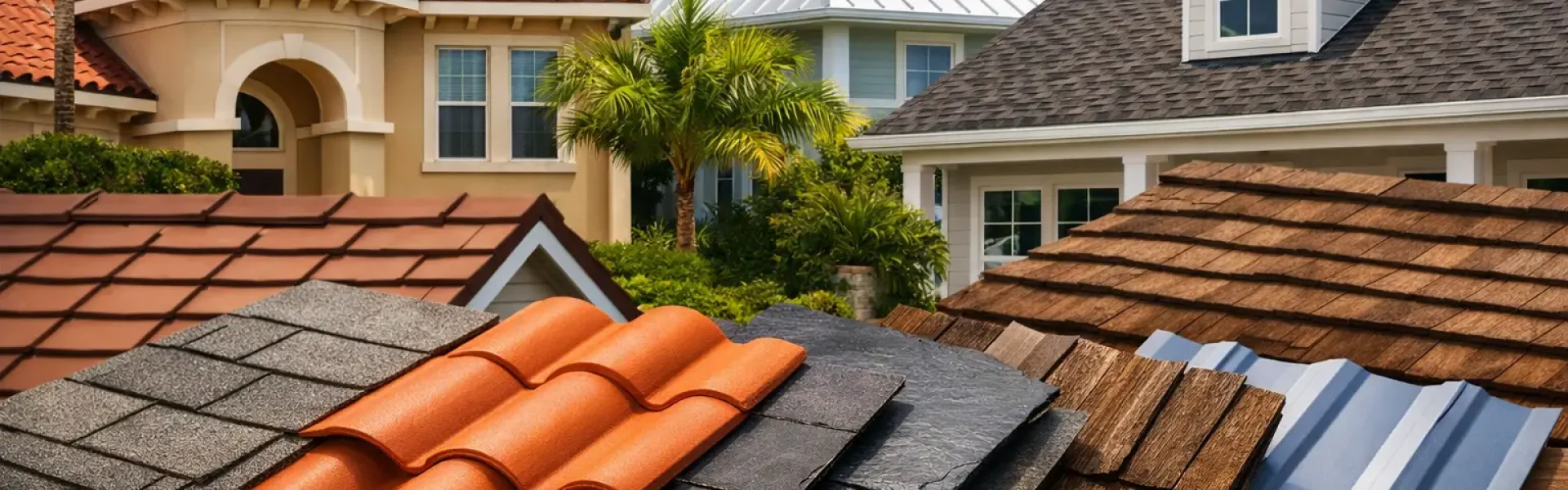
There are several common roofing materials in South Florida, but six options come up most often for residential properties. Each has strengths, limitations, and a price point that appeals to different homeowners.
👉 Schedule a Free Roofing Inspection
Asphalt shingles
Asphalt shingles are one of the most common and budget-friendly choices. They are popular because they are widely available, come in many colors, and generally cost less upfront than tile or metal. For homeowners looking for a practical replacement without the higher initial investment of premium materials, shingles can be a reasonable option.
The trade-off is lifespan and storm performance. While modern architectural shingles can offer solid wind ratings, they usually do not last as long as tile or metal in Florida’s heat and sun. Shingles can also be more vulnerable to algae staining and granule loss over time. If your priority is the lowest initial cost, shingles may make sense. If your priority is the longest service life, another material may be a better fit.
Metal roofing
Metal roofing has become increasingly popular in Florida, and for good reason. It is known for durability, strong wind resistance, and long-term performance. Properly installed metal roofs can handle harsh weather well, and many homeowners appreciate their clean, modern appearance.
Metal also reflects heat more effectively than many traditional materials, which can help with energy efficiency. That said, the upfront cost is higher than shingles, and not every homeowner wants the look. The installation also has to be done carefully, especially around fasteners, flashing, and transitions. In South Florida, a well-installed metal roof is often one of the strongest long-term investments.
Concrete tile roofing
Concrete tile is a familiar sight across South Florida neighborhoods. It offers a high-end appearance and works well with Mediterranean, Spanish, and many contemporary home styles. Concrete tile is also durable and can perform well in Florida’s climate when installed correctly.
Its biggest consideration is weight. Not every home is built to support a tile roof without structural review. Repairs can also be more specialized, and individual tiles may crack if walked on improperly. Even so, many homeowners choose concrete tile because it delivers curb appeal, longevity, and strong resale value.
Clay tile roofing
Clay tile is often seen as a premium roofing option. It has a distinctive appearance, excellent longevity, and strong resistance to sun exposure. For homeowners focused on aesthetics and long-term value, clay tile can be very appealing.
The trade-offs are similar to concrete tile, with cost usually even higher. It is heavy, requires skilled installation, and repairs should be handled carefully. In the right home, clay tile is a standout option, but it is not always the most cost-effective choice for every budget.
Flat and low-slope roofing systems
Many Florida homes, especially additions, modern homes, and some multifamily properties, have flat or low-slope sections. These areas typically use roofing systems such as modified bitumen, TPO, or other membrane-based materials rather than shingles or tile.
These systems can work very well, but they must be chosen and installed for the specific slope and drainage conditions of the roof. Ponding water, seam failure, and flashing issues are common concerns when low-slope roofs are not handled properly. For homeowners with flat roof sections, material selection and workmanship are especially important.
Synthetic roofing materials
Synthetic roofing products are designed to mimic the look of slate, shake, or tile while reducing weight and sometimes lowering maintenance demands. They can be an attractive option for homeowners who want a premium appearance without the structural load of traditional materials.
Performance varies by product, so this category requires a closer look at manufacturer specifications, local approvals, and warranty details. Some synthetic materials perform well in Florida, while others may not be ideal for extreme heat and storm exposure. This is one area where expert guidance really matters.
Which roofing type is best for South Florida homes?
There is no single best answer for every property. The best roof for your home depends on what matters most to you.
If budget is the main driver, asphalt shingles are often the most accessible starting point. If you want a longer-lasting roof with strong wind resistance, metal is hard to ignore. If curb appeal and upscale value are top priorities, concrete or clay tile may be the better fit. If your home has a flat section, a dedicated low-slope system is usually the correct choice rather than trying to force a traditional material where it does not belong.
This is also where local code and insurance considerations come into play. In South Florida, roofing systems must meet strict standards defined by the Florida Building Code, especially in high-velocity hurricane zones. https://www.floridabuilding.org/
Cost versus value in Florida roofing
If you’re comparing roofing options and want a clear understanding of cost versus long-term value, getting a professional quote based on your home is the smartest next step.
👉 Get a Free Roofing Quote for Your Home
A lower-priced roof is not always the better value. Homeowners sometimes focus on initial price alone, only to face repairs, shorter lifespan, or earlier replacement than expected. On the other hand, the most expensive roof is not automatically the smartest option either if it does not fit the structure of the home or your long-term plans.
A better way to look at roofing is through total value. That includes expected lifespan, maintenance needs, storm durability, energy performance, appearance, and how long you expect to own the home. A metal or tile roof may cost more upfront, but for many homeowners, that cost can make sense over time.
Financing can also change the decision. If a stronger, longer-lasting roofing system is within reach through monthly payments, it may be worth comparing the long-term benefit instead of defaulting to the lowest upfront number.
Why installation matters as much as the material
Homeowners often spend a lot of time comparing products and not enough time evaluating installation quality. In Florida, that can be costly. Underlayment, flashing, fastening patterns, ventilation, and code-compliant installation all affect how the roof performs in real weather.
Even the best material can fail early if details are missed. That is why roof replacement should be treated as a system, not just a product purchase. A professional inspection can reveal not only which material options fit your home, but whether there are structural, drainage, or code issues that need to be addressed at the same time.
For South Florida homeowners, working with a local company that understands hurricane-resistant roofing is a practical advantage. At Pro Lux Construction, that means helping homeowners make sense of their options clearly, from inspection and product selection to installation and financing.
How to make the right roofing decision
Start with the basics. Consider your roof shape, your budget, your neighborhood style, and how long you expect to stay in the home. Then think about what matters most – lower upfront cost, longer lifespan, better storm resistance, stronger curb appeal, or lower maintenance.
From there, get a professional evaluation. A good roofing recommendation should account for your home’s structure, local code requirements, and your priorities as a homeowner. It should also explain the trade-offs honestly. That is the difference between being sold a roof and choosing the right one.
A strong roof should give you more than coverage overhead. It should give you confidence when the forecast turns serious, and peace of mind long after the project is complete.
If you’re considering replacing or upgrading your roof, the best next step is a professional evaluation of your home’s current condition and available options.
👉 Schedule Your Free Roofing Inspection with Pro Lux Construction
Get expert guidance, understand your options, and make a confident decision based on South Florida conditions.
👉 Ask About Financing – Pay in 24 Months
You can upgrade your roof without delaying the project.
